
 0
0

Overview
Materials Safety Testing
For network cabling components, achieving compliance with RoHS 2.0 and REACH is a fundamental requirement for accessing the European market. These are not optional quality marks but legally binding regulations that impose specific material restrictions and documentation obligations on manufacturers.
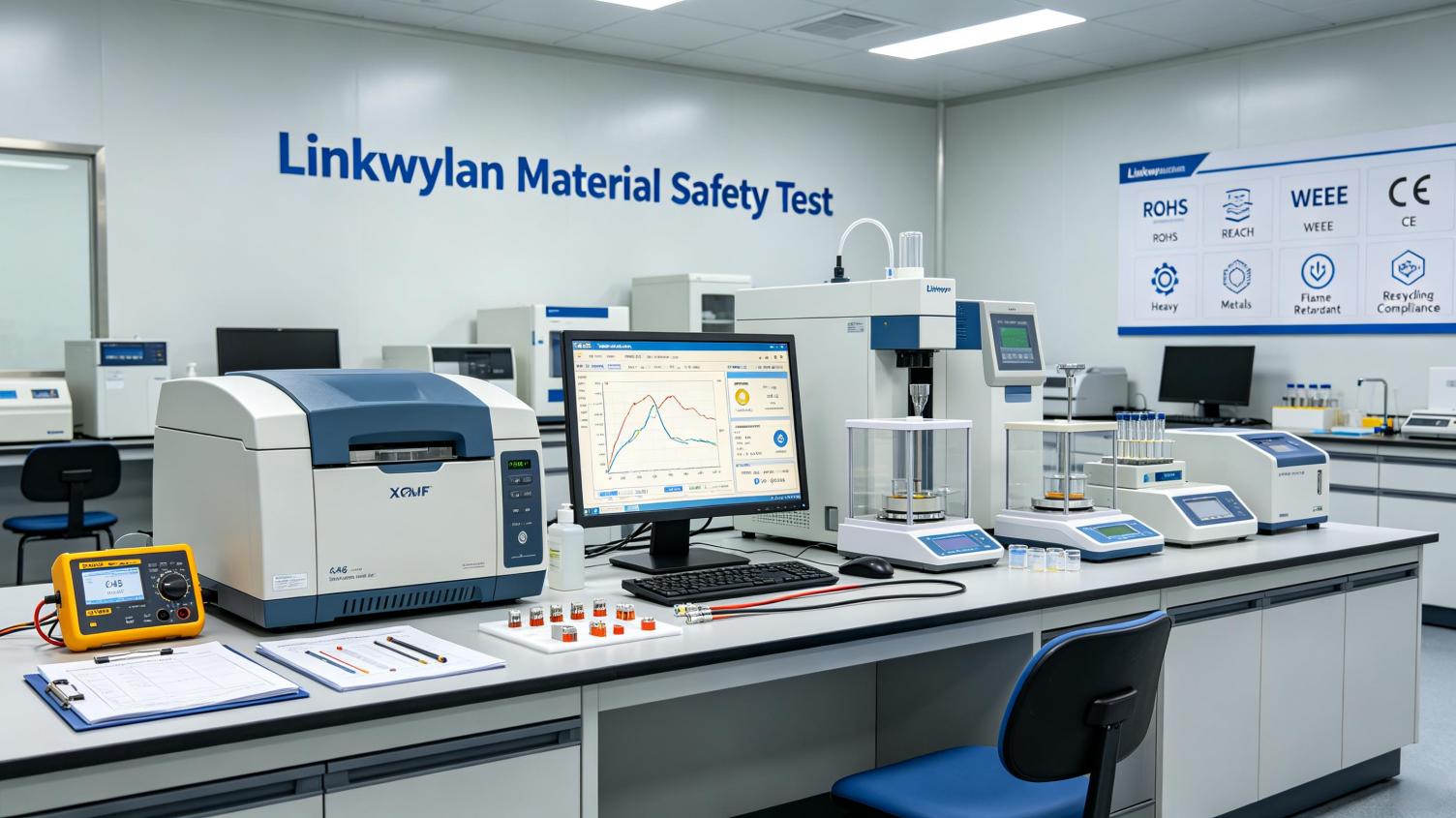
Compliance Requirements
Here is a summary of the core requirements for each:
RoHS 2.0 (Directive 2011/65/EU)
Restricts the use of specific hazardous substances in electrical and electronic equipment.
Limits 10 substances in homogeneous materials: Lead (Pb), Mercury (Hg), Cadmium (Cd), Hexavalent Chromium (Cr VI), PBB, PBDE, and four phthalates (DEHP, BBP, DBP, DIBP). The general limit for each is 0.1% by weight, except for Cadmium at 0.01%.
REACH (Regulation (EC) No. 1907/2006)
Manages the risks posed by chemicals throughout their lifecycle.
Requires manufacturers to register chemicals and communicate if a product contains Substances of Very High Concern (SVHC) above a threshold of 0.1% by weight.
Practical Implications for Compliance
Understanding the details of these requirements is critical for ensuring your products are fully compliant.
-
RoHS 2.0 Scope and Applicability
The “2.0” designation marks a significant expansion from the original RoHS. It now covers all electronic and electrical equipment (EEE), including categories like medical devices and monitoring equipment, with a specific inclusion for “line cables and other components”. This means network cabling components sold in the EU must comply unless they meet a specific exemption. Compliance is also now linked to the CE marking, meaning a product’s RoHS 2.0 conformity is part of its CE declaration and technical documentation.
-
The “Homogeneous Material” Principle for Testing
A common and costly misunderstanding involves how testing is conducted. For both RoHS and REACH, the regulations mandate testing at the homogeneous material level—the smallest indivisible part that cannot be mechanically separated. For a network cable, this means the copper conductor, its lubricant layer, the inner insulation (PE or PP), the jacket material (PVC or LSZH), and any shielding foil must each be analyzed separately. A single non-compliant component, however minor, will render the entire product non-compliant.
-
REACH and the Evolving SVHC List
The list of Substances of Very High Concern is dynamic and updated regularly by the European Chemicals Agency (ECHA). Products containing any SVHC above the 0.1% threshold have a duty to communicate this information through the supply chain. This information must also be submitted to the SCIP database, creating a continuous compliance and documentation requirement for manufacturers.
-
Final Important Distinction
RoHS is a “CE marking directive” specifically for the EEE industry, while REACH is a “chemicals regulation” that applies to almost all products, including components like cables. Products entering the EU market must comply with both sets of rules, and in cases of overlap, the stricter requirement applies.
Linkwylan primarily ensures compliance with RoHS 2.0 and REACH requirements through a combination of quality sourcing, third-party testing, and formal certification.
To guarantee that its products meet international standards from the start, Linkwylan partners with world-class original raw materials manufacturers for their high production and management standards. This foundational step helps ensure that materials are sourced responsibly.
The company further secures its compliance by conducting rigorous internal checks. It has established a dedicated testing center and employs a substantial team to perform tests that simulate real customer application environments. This is done to verify product compatibility and stability before delivery.